
Sun Lakes Lawn Edging Services
Choose our Lawn Edging services for precise, durable borders that enhance curb appeal, simplify maintenance, and give your landscape a polished, professional look.
Get a Free QuoteOur Sun Lakes Landscaping & Yard Care Services
When to Schedule Lawn Edging in Sun Lakes, Arizona – Seasonal Guide
In Sun Lakes, Arizona, the best times to schedule lawn edging are typically in early spring and late fall. These periods align with the region’s mild temperatures and reduced risk of extreme heat or frost, making it easier to achieve crisp, clean edges without stressing your turf. Neighborhoods near Cottonwood Country Club and along Riggs Road often experience unique microclimates, so it’s important to consider your property’s specific conditions.
Local environmental factors such as the area’s alkaline soil, low humidity, and occasional drought conditions can impact the timing and frequency of lawn edging. Properties with dense shade from mature mesquite or palo verde trees, especially in the Ironwood and Oakwood communities, may require more frequent attention due to slower grass growth and increased leaf litter. For more information on local landscaping guidelines, visit the Sun Lakes community resource.
Local Factors to Consider for Lawn Edging in Sun Lakes
- Tree density and shade coverage
- Soil type and drainage
- Seasonal precipitation and drought risk
- Proximity to golf courses or water features
- Municipal landscaping restrictions and HOA guidelines
- Terrain variations, such as sloped yards or rocky areas
Benefits of Lawn Edging in Sun Lakes
Enhanced Curb Appeal
Weed Growth Prevention
Defined Landscape Borders
Low Maintenance Solutions
Increased Property Value
Professional Installation Expertise
Sun Lakes Lawn Edging Types

Metal Lawn Edging
-
Plastic Landscape Edging
-
Brick Lawn Borders
-
Stone Edging
-
Concrete Curbing
-
Wooden Landscape Borders
-
Rubber Lawn Edging
Our Lawn Edging Process
Site Evaluation
Marking Edges
Cutting the Edge
Debris Removal
Final Inspection
Why Choose Sun Lakes Landscape Services
-
Sun Lakes Homeowners Trust Us
-
Expert Lawn Maintenance
-
Reliable Irrigation Solutions
-
Comprehensive Weed Control
-
Professional Tree and Shrub Care
-
Consistent Quality Service
-
Competitive Pricing
Coordinating Lawn Edging Services with Sun Lakes Municipal and County Departments
Sun Lakes is an unincorporated community in Maricopa County, which means residents coordinate landscape maintenance standards through county-level departments and individual homeowner association (HOA) governance rather than a city government. Lawn edging along curbs, sidewalks, and shared pathways generates clippings and soil debris that must be managed to prevent material from entering street gutters and stormwater inlets. Maricopa County oversees drainage infrastructure and right-of-way maintenance in unincorporated areas, and property owners should verify current debris-disposal expectations before beginning edging work adjacent to public infrastructure.
- Confirm green waste and clipping disposal procedures through county public works resources before scheduling edging on properties adjacent to county-maintained roadways
- Ensure edging debris does not accumulate in curb inlets, retention basin edges, or drainage swales serving the community
- Review HOA architectural and landscape maintenance standards, as most Sun Lakes subdivisions enforce specific turf appearance and edge-line requirements
Maricopa County Engineering Design
Official Website: Maricopa County Engineering Design
Maricopa County Water, Sewage, Stormwater & Waste Services
Official Website: Maricopa County Water, Sewage, Stormwater & Waste Services
How Sun Lakes's Low-Desert Heat and Alkaline Soils Affect Lawn Edging
Sun Lakes sits in the Phoenix metro low-desert region within USDA Hardiness Zone 9b–10a, where summer temperatures routinely exceed 110°F and soils are predominantly alkaline sandy loam over caliche hardpan. These conditions directly influence lawn edging outcomes. Bermudagrass, the dominant warm-season turf in Sun Lakes, grows aggressively along hardscape borders during the active summer months, requiring frequent edge maintenance to prevent stolons from creeping onto sidewalks, driveways, and decorative rock borders. During winter, many properties overseed with perennial ryegrass, which produces softer growth that still demands clean edge definition.
- Reflected heat: Concrete walkways, block walls, and light-colored pavement radiate heat that accelerates turf growth along edges, increasing the frequency of edging cycles
- Caliche and compacted fill: Subsurface caliche layers common in Sun Lakes subdivisions can deflect edging blades and cause uneven cut lines, requiring operators to adjust depth settings
- Irrigation overspray: Turf edges adjacent to hardscape often receive excess moisture from spray heads, promoting dense lateral growth and mineral salt deposits along curb lines
- Monsoon runoff: July through September storms push loose soil and clippings toward retention basins and street drains, making post-edging cleanup essential
The University of Arizona Cooperative Extension provides region-specific guidance on bermudagrass management that applies directly to edge-maintenance timing in low-elevation communities like Sun Lakes.
Navigating Stormwater Compliance and Landscape Regulations for Sun Lakes Edging
Because Sun Lakes falls under Maricopa County jurisdiction, stormwater management follows county-level programs aligned with Arizona DEQ Phase II MS4 requirements. Lawn edging generates soil particles, grass clippings, and occasionally fertilizer-laden debris that can wash into storm drains during irrigation cycles or monsoon events. Under the Clean Water Act, these discharges are regulated to protect downstream water quality.
- Edging debris must be swept or blown back onto turf areas rather than left on sidewalks, curbs, or street gutters where it can enter the storm drain system
- Properties adjacent to retention basins or drainage channels should schedule edging before irrigation cycles to allow cleanup before water reaches hardscape
- Pesticide or herbicide application along freshly edged borders requires compliance with Arizona Department of Agriculture licensing standards for commercial applicators
- HOA landscape committees in Sun Lakes communities may impose additional appearance standards for edge lines along common-area boundaries and golf course frontages
Maricopa County Environmental Services
Official Website: Maricopa County Environmental Services
Residents should verify current stormwater and landscape-debris requirements through county environmental services, particularly for properties bordering shared drainage infrastructure.
Timing and Methods for Professional Lawn Edging in Sun Lakes's Climate
Professional lawn edging in Sun Lakes follows seasonal patterns dictated by turf growth cycles and extreme heat exposure. The Turfgrass Maintenance Guide for Low Elevation Arizona outlines bermudagrass growth periods that directly inform edging schedules. During peak summer growth from May through September, edging may be needed every one to two weeks to maintain clean hardscape boundaries. Winter ryegrass overseeding periods from October through March require lighter, less frequent edging passes.
- Blade depth: Mechanical edgers should be set to cut a clean vertical line approximately 2–3 inches deep along sidewalks and curbs without undercutting irrigation lines or damaging hardscape
- Morning scheduling: Edging during early morning hours reduces heat stress on operators and minimizes turf desiccation along freshly cut edges, particularly from June through August
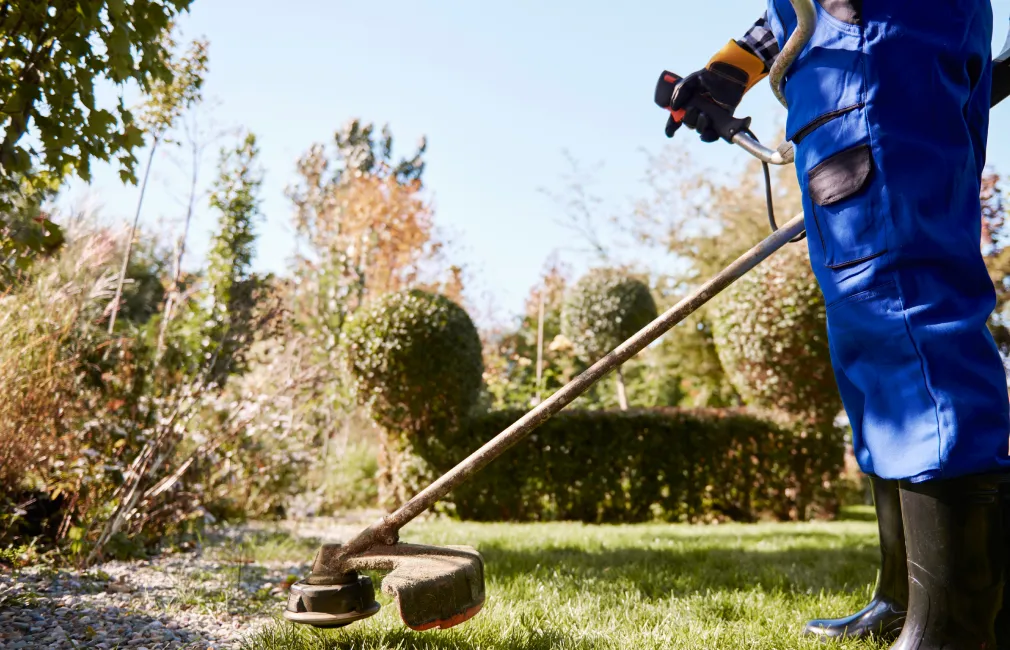
- String trimmer use: Rotary string trimmers are commonly used for secondary edge detailing around tree rings, planting beds, and decorative rock borders where mechanical edgers cannot reach
- Curb and gutter debris control: All clippings, soil, and organic material displaced during edging must be collected from hardscape surfaces immediately to prevent accumulation in gutter flow lines
- Irrigation coordination: Edging should be scheduled at least several hours before or after irrigation cycles to avoid working in saturated soil, which causes ragged cuts and excess debris
Operators working along golf course perimeters and community pathway systems in Sun Lakes should coordinate timing with HOA landscape schedules to avoid conflicts with irrigation and mowing rotations.
What Neighborhoods Do We Serve Throughout Sun Lakes, AZ?
- Sun Lakes Country Club (Phase 1): One of the original Sun Lakes developments, featuring mature bermudagrass lawns with established hardscape borders along golf course frontages that require consistent edge maintenance to prevent turf encroachment onto cart paths and sidewalks
- Cottonwood Country Club: Properties here often feature irrigated turf adjacent to decorative rock and block walls, creating reflected-heat zones where aggressive bermudagrass stolon growth demands frequent edging
- Palo Verde Country Club: Larger lot sizes and extensive common-area turf borders along fairways increase the linear footage of edging required per property and per HOA maintenance cycle
- Ironwood Country Club: This community includes properties near retention basins and drainage corridors where post-edging debris management is particularly important for stormwater compliance
- Oakwood Country Club: Newer construction with compacted subdivision fill soils can cause uneven edge lines, requiring operators to adjust mechanical edger settings to maintain clean vertical cuts along curbs and walkways
- Springfield: Properties in this subdivision feature a mix of turf and xeriscape borders, requiring careful edging transitions between grass and decorative gravel to prevent material migration